
Google doesn’t change things quietly, and AI Mode is a clear example of that. Across the industry, marketing leaders are raising the same concern: Will Google’s AI Mode harm organic traffic?
That concern isn’t exaggerated; the search engine is changing not just how results are displayed, but how users move through the entire search journey. User expectations, engagement patterns, and decision-making behaviors are shifting, and these changes necessitate a closer examination of how SEO operates in an AI-driven environment.
What is Google’s AI Mode?
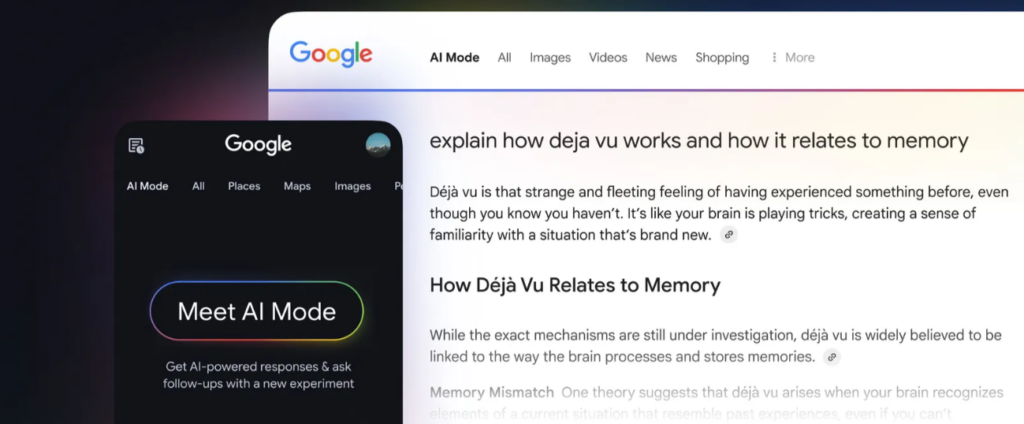
Image captured from Google Blog
Google AI Mode transforms search into an answer-first experience. It increasingly completes the work on the results page itself, rather than displaying a list of websites and allowing consumers to choose where to go.
Google AI Mode and AI Overviews both utilize Gemini models to deliver synthesized answers; however, AI Mode offers a full-screen, conversational search experience for complex, multi-step queries. AI Overviews, in contrast, appear as static summaries atop traditional search results, providing quick access to informational needs.
To understand the impact, it is helpful to examine what AI Mode enables users to do. It features:
- Canvas-style planning tools, where AI Mode gives users a side panel where they can create study plans, project outlines, or custom guides.
- Search Live with video and audio, where Users can interact with the search in real time using their camera or voice.
- Personal context integration by taking into account signals from past searches, Gmail, Calendar, and Maps.
- Fan-out querying and agentic search that lets the system deliver deeper research, show better shopping comparisons, or even plan tasks like trips.
- Chrome and multimodal enhancements, in which AI Mode integrates directly with Chrome, so people can ask questions about the page they’re reading or upload PDFs from their desktop.
Together, these characteristics make the way clear. Google is presenting itself as the setting where end-to-end research, comparison, and decision-making take place.
How It Impacts SEO and Organic Traffic
Even with AI Mode, not all organic traffic disappears. Users still visit websites when they have a clear transactional intent, and in fact, 69% of AI Mode sessions result in website visits for these types of searches. What has changed is the broader pattern of how people interact with search results.
Here’s a closer look at how Google AI Mode impacts SEO and organic traffic:
- Absence of Traditional Blue Links
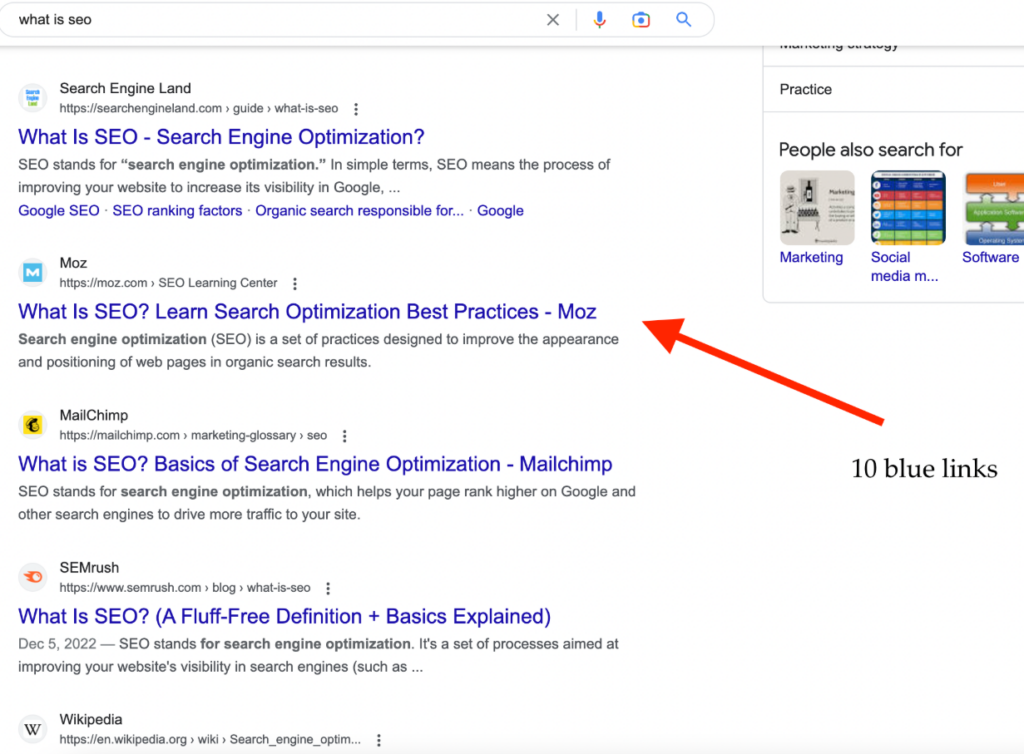
Image captured from SEO Case Study
For years, SEO specialist Philippines built their strategies around landing websites in one of the ten organic positions on page one. AI Mode disrupts that structure by replacing those listings with an AI-generated response and a handful of citations. Some sites have lost between 20% and 60% of their traffic because of this.
From a practical standpoint, this means many pages technically still rank but no longer receive impressions or clicks.
- Lower Click-Through Rates for Top Rankings
In traditional search, a top ranking could drive consistent, predictable traffic. However, since AI Mode answers a query directly, users often stop there.
SEO has already witnessed the impact of AI overviews on traffic, as click-through rates (CTRs) decline by 34.5% on average. The lack of organic search results and the inability to track these touchpoints are the most worrisome issues for SEOs.
- Acceleration of Zero-Click Searches
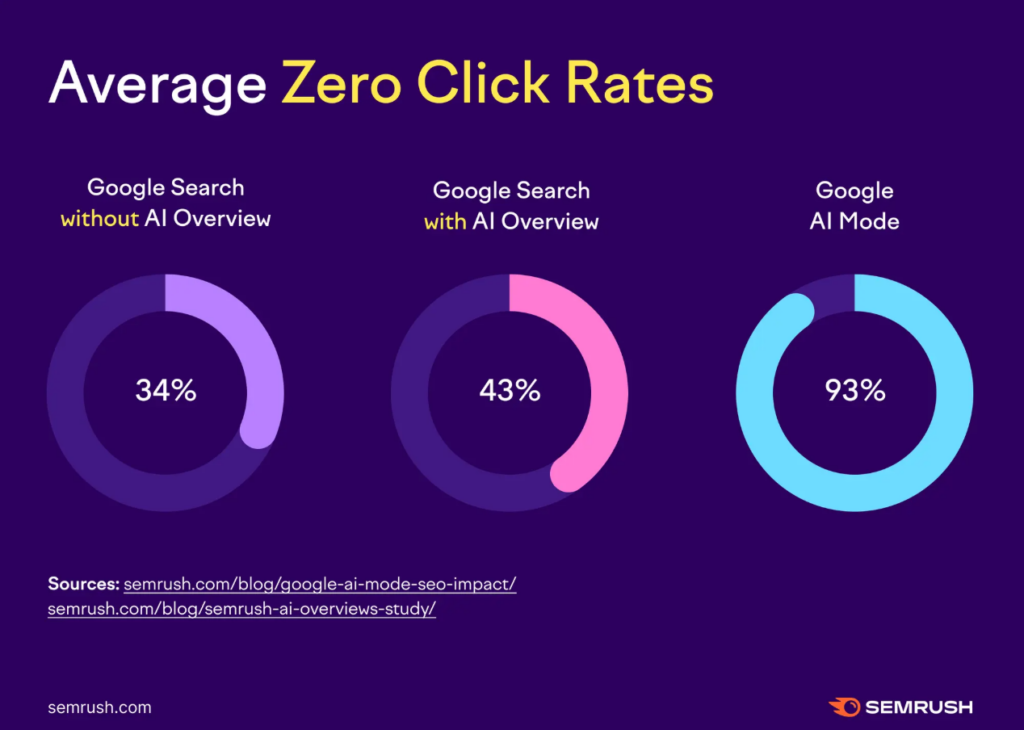
Image captured from Semrush
Zero-click searches have been increasing for years, but AI Mode pushes them into the mainstream. Informational queries that once fueled top-of-funnel traffic are now fully resolved within Google’s interface, with some 60% of searches resulting in users never visiting a single website.
SEO Strategies to Optimize for Google AI Mode
As AI Mode alters how visibility is earned, SEO strategies must adapt accordingly. The goal is not to fight AI Mode, but to position your brand so that it benefits from it. Here’s how SEO can respond to Google AI Mode:
- Master the Fundamentals That Still Matter
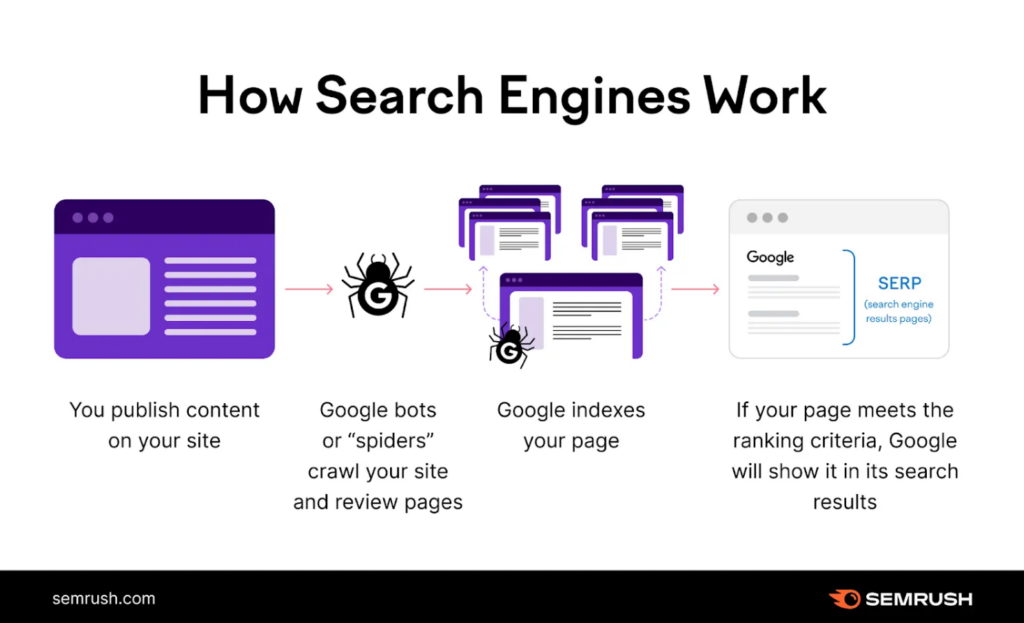
Image captured from Semrush
Even with AI-driven search, technical SEO is non-negotiable. You need a site that is fully crawlable, fast, and easy for Google to interpret. Focus on:
- Readability ensures content is easy to scan and understand by using short sentences, clear headings, bullet points, and active voice to boost user engagement and time on page.
- E-E-A-T (Experience, Expertise, Authoritativeness, and Trustworthiness) guides Google’s quality raters in favoring content from credible creators who provide real-world proof, such as author bios and citations.
- Technical SEO optimizes a site’s infrastructure, including crawlability, site speed, mobile-friendliness, HTTPS security, and structured data to help Google index and serve pages effectively.
- Build Authority Beyond Your Website
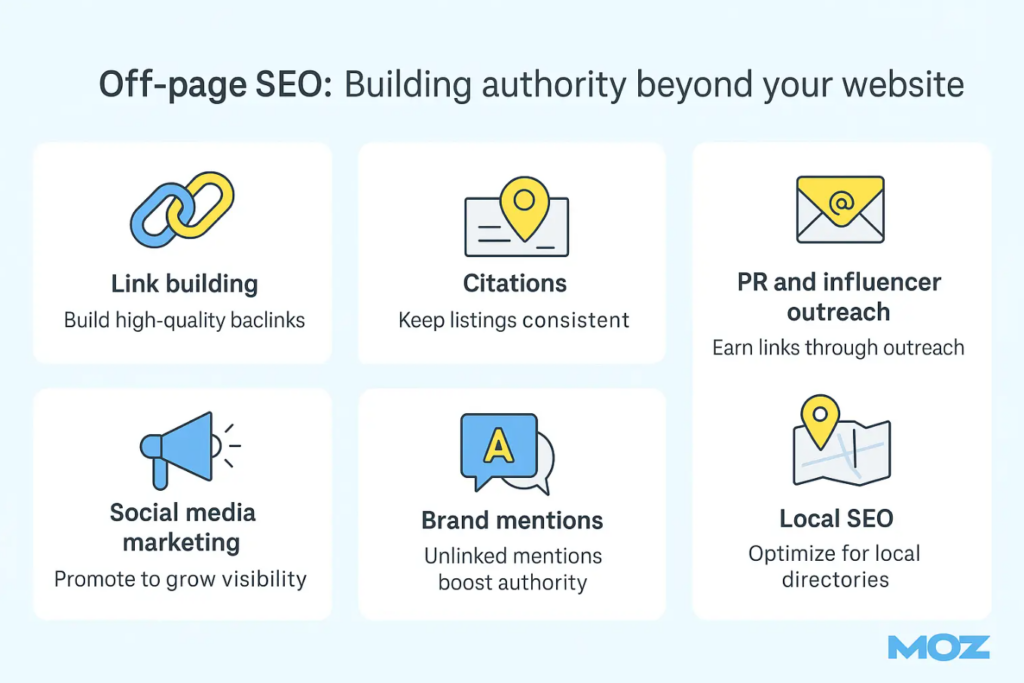
Image captured from Moz
Signals of trust are crucial to Google AI Mode. Google is informed that your content is trustworthy via backlinks from dependable sources, brand references in reputable publications, and a strong industry presence.
Dozens of low-value connections are not as important as links from high-authority, pertinent sources. Similarly, partnerships, social proof, and thought leadership all contribute to Google’s perception of your brand as reliable.
- Optimize for AI-Driven Search
To increase your chances of being cited in AI Mode, your content needs to be structured in a way AI systems can easily interpret and trust. You can focus on these core optimization areas:
- Question-based subheadings are most effective when they accurately reflect how people actually search, and it makes it easier for AI to understand the intent of the page and pull accurate answers.
- Structured data should be applied where it adds clarity, not just for the sake of implementation.
- Intent-focused content performs better when it aligns with evaluation or purchase behavior.
- Freshness plays a bigger role than many expect; updating key pages signals relevance and reliability, which increases the likelihood of being surfaced in AI-driven results.
Let’s Build an SEO Strategy for an AI-Driven World
Google AI Mode shifts attention, but it also highlights which content truly matters. Brands that earn trust and provide useful, well-structured content are the ones that benefit most in Google’s new feature.
Expert guidance can help you navigate this new AI-driven search landscape and build strategies that work across multi-channel ecosystems. As a consultant SEO specialist, I can help you identify opportunities, optimize your content, and strengthen your authority so your brand stays visible. With over 16 years of experience as an SEO specialist, I’ve helped businesses maintain visibility and stay competitive even as search behaviors evolve.
Contact me today to sharpen your digital strategy and ensure your content continues to attract high-intent traffic.
References:
https://blog.upspell.com/omni-seo/
https://search.google/ways-to-search/ai-mode
https://www.searchenginejournal.com/google-connects-ai-overviews-to-ai-mode-on-mobile/562236
https://technologymagazine.com/articles/how-googles-new-ai-mode-could-devastate-web-traffic-seo