
Have you noticed how often you use your phone’s camera to learn more about something you see? You might scan a product while shopping, identify a plant during a walk, or search for a piece of furniture that catches your attention. Those everyday actions show how visual search has become part of the way people search online.
Search engines now analyze visual elements to interpret what appears in an image before presenting relevant results. This shift changes how websites should approach search engine optimization (SEO). Search visibility no longer depends only on written content. Consequently, every image published on a website creates another way to appear in search results and reach potential customers.
As an SEO consultant in Cavite, I have seen businesses improve their presence by treating images as searchable assets instead of decorative elements. If you want your website to remain competitive as search evolves, visual search should become part of your overall SEO strategy.
Understanding the Elements of a Visual Search
When you submit a photo through a visual search tool, the system compares it against billions of indexed images. The goal reaches further than finding identical pictures. AI attempts to understand what appears in the image and predict the information you expect next.
Several factors influence this process.
Object Recognition
Modern AI systems identify multiple objects inside a single image instead of focusing on only the primary subject. A restaurant image may contain food, table settings, drinks, menus, furniture, and branding. Each recognized element contributes additional signals that improve search relevance.
Image Quality and Clarity
High-resolution images provide more recognizable details. Sharp edges, accurate colors, and balanced lighting help machine learning models distinguish products, materials, textures, and shapes with higher accuracy.
Blurry, heavily compressed, or overly filtered images reduce the amount of visual information that computer vision systems can interpret accurately. As a result, search engines may struggle to identify important details or match the image with related queries.
Context Around the Image
Search engines evaluate more than pixels. The surrounding content provides valuable context. Relevant headings, descriptive paragraphs, captions, structured data, and page titles explain what the image represents. Those supporting elements strengthen the connection between the image and its intended topic.
Context also helps AI distinguish similar objects. A photo of running shoes in a fitness article carries a different meaning than the same shoes featured inside a fashion guide. Likewise, the same principle applies to local SEO, where your location-specific images, surrounding content, and business information help search engines associate visual content with the appropriate geographic searches.
Visual Search Tools That Shape User Behavior
You can now access visual search through multiple platforms. Each platform uses artificial intelligence differently, yet they share similar objectives. Understanding how the elements of a visual search work across these tools helps you prepare your website to appear more often across image-based searches.
Google Lens
Google Lens remains the most recognizable visual search platform. You can photograph clothing, electronics, plants, furniture, books, buildings, artwork, and countless other objects. Google then identifies similar products, related information, reviews, shopping options, and relevant webpages, serving nearly 20 billion visual searches each month, 20% of which involve shopping.
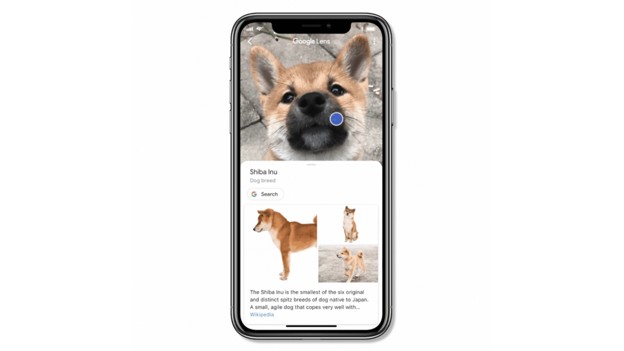
Image from Google
If you sell products online, Google Lens opens new opportunities because many shoppers now begin product research with a camera rather than a search box. This growing behavior has also increased the importance of Google Lens SEO, which focuses on making your images easier for Google Lens to recognize and connect with relevant webpages.
Apart from shopping, Google Lens also supports translation, homework assistance, landmark identification, and barcode scanning, making visual search useful across many everyday tasks.
Pinterest Lens
Pinterest focuses heavily on inspiration and product discovery. You can search for fashion, interior design, recipes, crafts, travel ideas, and home improvement projects through images instead of keywords.
If your business uses strong lifestyle photography, Pinterest can expand its visibility by connecting your visual content with similar images across millions of posts. High-quality photography becomes especially valuable for brands operating within creative industries.
Bing Visual Search
Microsoft continues improving visual search through Bing. You can upload images, crop specific objects, and discover visually similar products or related webpages.
Its recognition technology performs well across e-commerce, landmarks, consumer products, and educational topics. Optimization strategies remain similar across major visual search engines, making consistent image SEO valuable regardless of the platform.
How Google Continues to Expand Visual Search
Google continues adding new AI-powered visual search features that make searching with images faster and more interactive. The following features show how image-based search has evolved into a more interactive and intelligent search experience.
- Google Images – Helps users discover products, ideas, and information by searching with images instead of relying only on text.
- Google Lens Within Search – Allows users to upload or capture a photo directly in Google Search to learn more about what they see.
- Multisearch in Lens – Combines an image with text to narrow results and better match the user’s intent.
- Circle to Search – Lets users circle, tap, or highlight an object on their screen to search without switching apps.
- Lens With AI Mode – Builds on visual search by answering follow-up questions about the identified object.
- Search Live – Uses a phone’s camera to analyze objects in real time while users ask questions.
- AI Mode Visual Results – Presents images, summaries, and other relevant information in a richer search experience.
- Circle to Search Multi-Object Recognition – Detects multiple objects in a single scene, allowing users to search each item individually.
Practical Methods for Optimizing Images for Visual Search
Once you understand the elements of a visual search, optimizing images becomes much more effective. Visual search optimization combines technical SEO with quality visual content. Every published image should support discoverability instead of simply filling space.
Here are effective methods for optimizing images for visual search using proven SEO and image optimization practices:
Use Original Images Whenever Possible
Stock photography often appears across hundreds of websites, marketplaces, social platforms, and business listings. Duplicate visuals provide limited uniqueness for search engines. Original photography creates stronger associations between a business, its brands, and its products. Authentic images also build credibility because visitors see actual locations, employees, inventory, or completed projects.
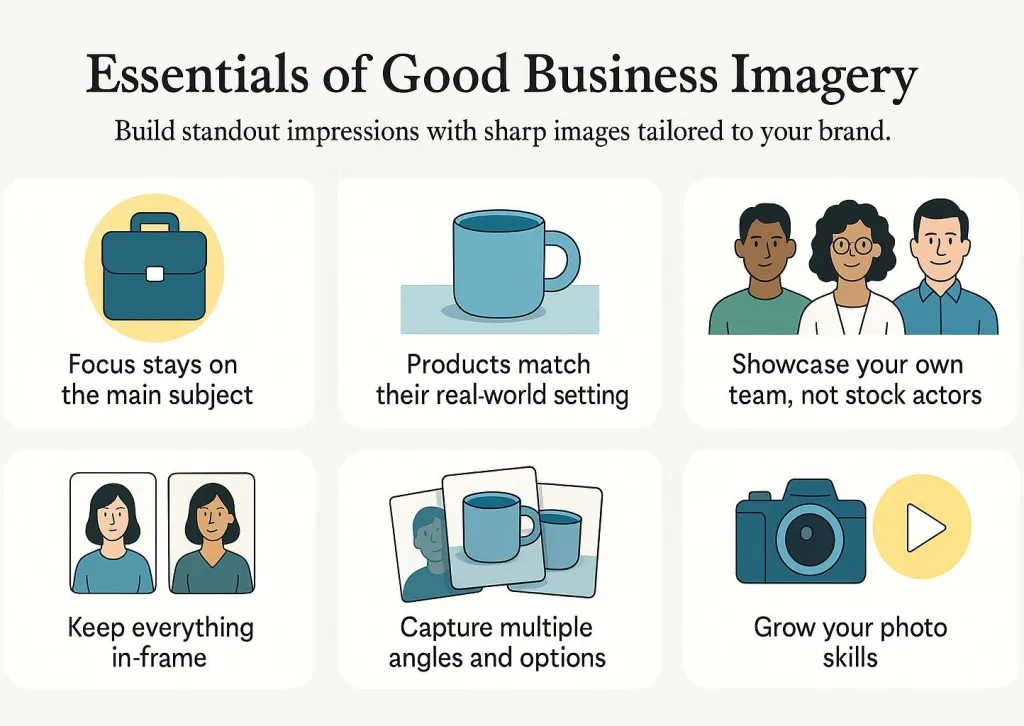
Image from Business.com
Professional product photography becomes even more valuable for e-commerce websites. Multiple viewing angles help both shoppers and visual recognition systems understand each product. Effective visual search optimization begins with authentic visual assets rather than generic stock photography.
Improve Image Metadata
Metadata remains valuable despite advances in artificial intelligence. Image filenames should describe the subject clearly instead of using random numbers generated by cameras.
Good example:
handmade-leather-wallet-brown.jpg
Poor example:
IMG_48372.jpg
Alt text should explain the image naturally, while captions should support nearby content instead of repeating identical descriptions.
Structured data adds supporting information. Product schema, local business schema, and image schema help search engines connect visual content with webpage intent.
Optimize File Performance
Large image files slow down websites and reduce user satisfaction. Compression minimizes unnecessary file size without sacrificing visible quality. Modern formats such as WebP often provide better performance than older alternatives.
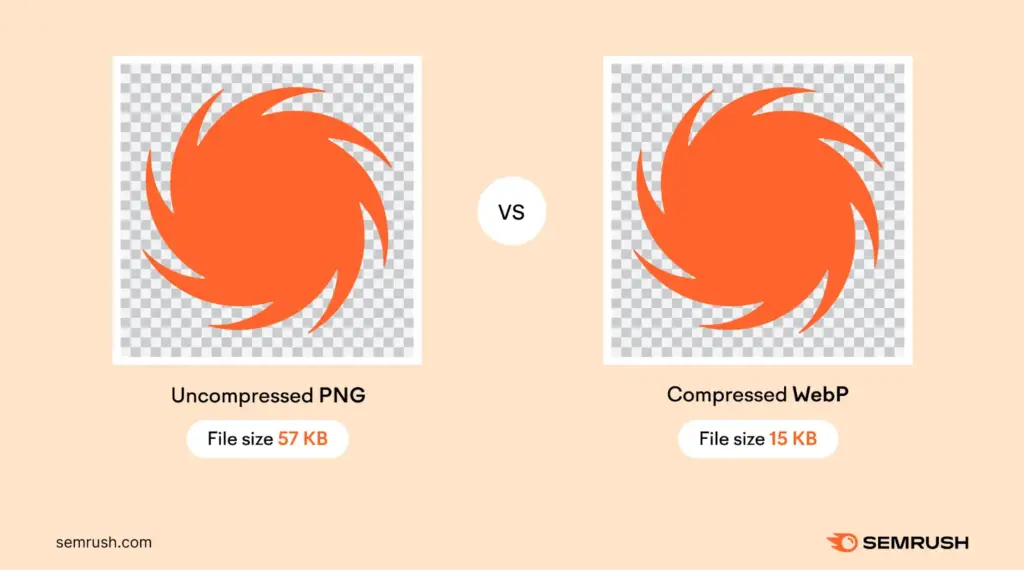
Image from Semrush
Responsive images deliver appropriate dimensions across different screen sizes. Mobile visitors avoid downloading oversized desktop images, which improves loading speed.
Fast websites encourage longer engagement. Better user experiences support stronger search performance across multiple ranking systems.
Build Relevant Surrounding Content
Visual search does not evaluate images independently. Supporting content gives search engines additional context about the subject. Product descriptions, headings, FAQs, specifications, and category pages reinforce what an image represents. Search engines compare visual information with textual relevance. Strong alignment supports more accurate indexing.
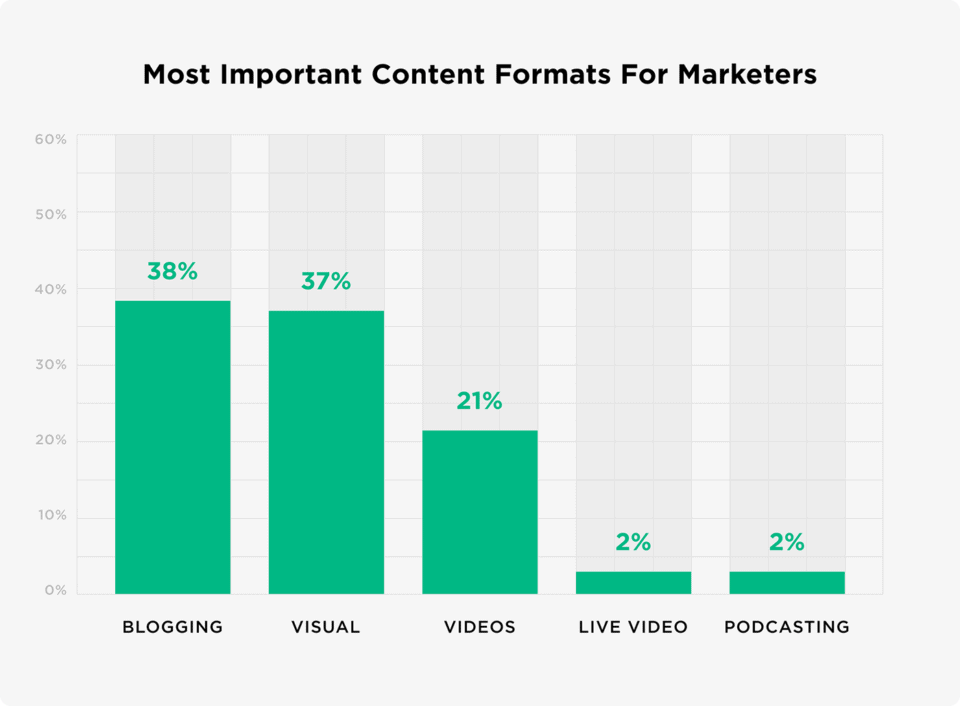
Image from Backlinko
If you focus on optimizing images for visual search, treat your written content and visual assets as complementary components instead of separate marketing tasks. You may also benefit from working with an experienced SEO team Philippines to align image optimization, technical SEO, and content strategy into a unified approach for long-term organic growth.
Start Building a Stronger Visual Search Presence
Visual search is becoming a natural part of how people explore products, services, and information online. Businesses that continue focusing only on traditional keyword optimization risk missing valuable opportunities. Make visual content part of your SEO strategy today so your website is prepared for how search continues to evolve.
If you want to strengthen your image SEO and prepare your website for the future of search, work with an experienced SEO specialist. I provide practical, data-driven SEO strategies that improve visual search visibility through technical optimization, image SEO, structured data, and content development.
Hire me, and let’s discuss how I can help your business achieve stronger organic growth through a smarter SEO strategy.
References:
https://www.shopify.com/blog/what-is-visual-search
https://www.semrush.com/blog/visual-search
https://blog.hubspot.com/marketing/visual-search-will-change-marketing
https://searchengineland.com/visual-content-seo-images-videos-447306