
AI Overviews (AIO) are now displayed for over half of all Google searches. A one-year comparison from February 2025 to 2026 shows that its coverage grew by 58%, with industries like education and B2B technology experiencing the strongest expansion. In these sectors, AI results now appear in 83% and 82% of queries, respectively, a significant jump from 18% and 36% of the previous year.
AI-generated answers are rapidly becoming a default part of the search experience rather than a feature shown only for select queries. This level of expansion signals a structural shift in how search works. Instead of appearing only on complex or informational queries, Google AI Overviews are now being triggered across a much broader range of search intents.
In 2026, visibility is no longer about simply ranking well but also about being selected as a source within AI-generated responses. Brands implementing search engine optimization (SEO) must adapt to this trend or risk becoming overshadowed by more progressive competitors.
What are Google AI Overviews, and How Do They Work?
Google AI Overviews are a search feature that provides users with a summarized response to their query. It typically appears at the top, although it may sometimes come after sponsored and even organic results. It is currently available in 120 countries and 40 languages.
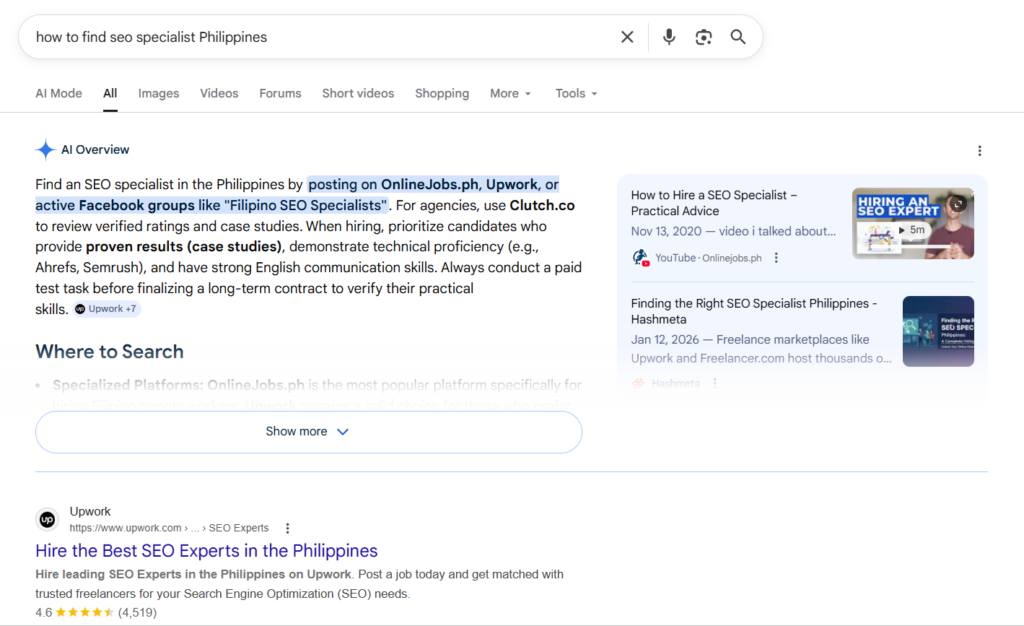
AI Overviews are powered by Gemini, Google’s suite of multimodal large language models (LLMs), which can process texts, images, audio, and code. Currently, Gemini 3 is the default model for AI Overviews.
Google AI Overviews employs retrieval-augmented generation (RAG) instead of relying solely on its LLM’s internal training. This means that it pulls real content from the web to extract snippets and weave them into a generated summary. RAG follows Google’s existing search infrastructure, which means ranking factors used in traditional search optimization would also matter when executing SEO AI Overviews.
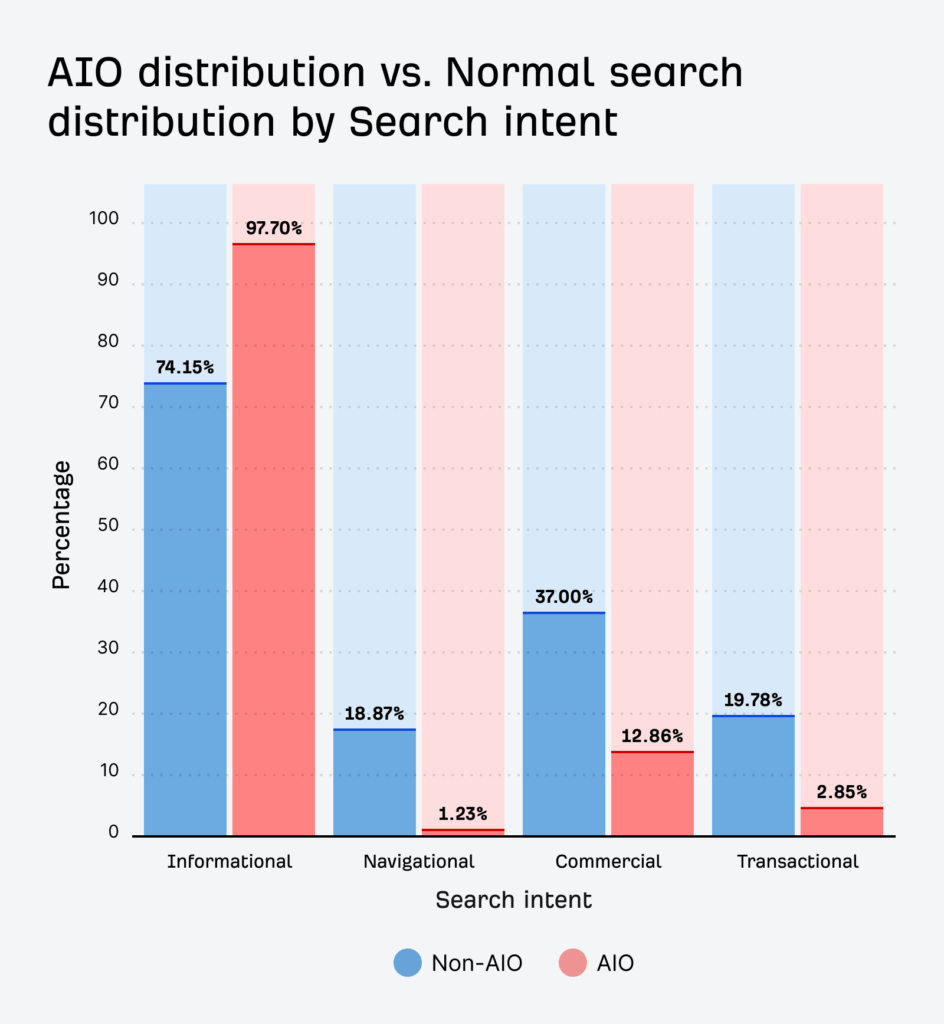
Image from Ahrefs
The AI Overview interface includes an expandable section, which reveals additional details without leaving the search page. Its content often includes source links embedded within the text that allow users to quickly navigate to referenced platforms or websites. Some results also display a side panel with related videos or articles. Users can also enter a dedicated conversational mode (AI Mode) to ask follow-up questions and pull deeper insights from the web.
AI summaries primarily appear on informational, “how-to”, and long-tail queries. In fact, around 98% of searches with informational intent trigger an AIO. At the same time, it displays less on branded, local, and shorter queries. Since its rollout in May 2024, Google AI Overviews now show up in 55% of searches and are causing 34.5% lower clicks in top-ranking pages.
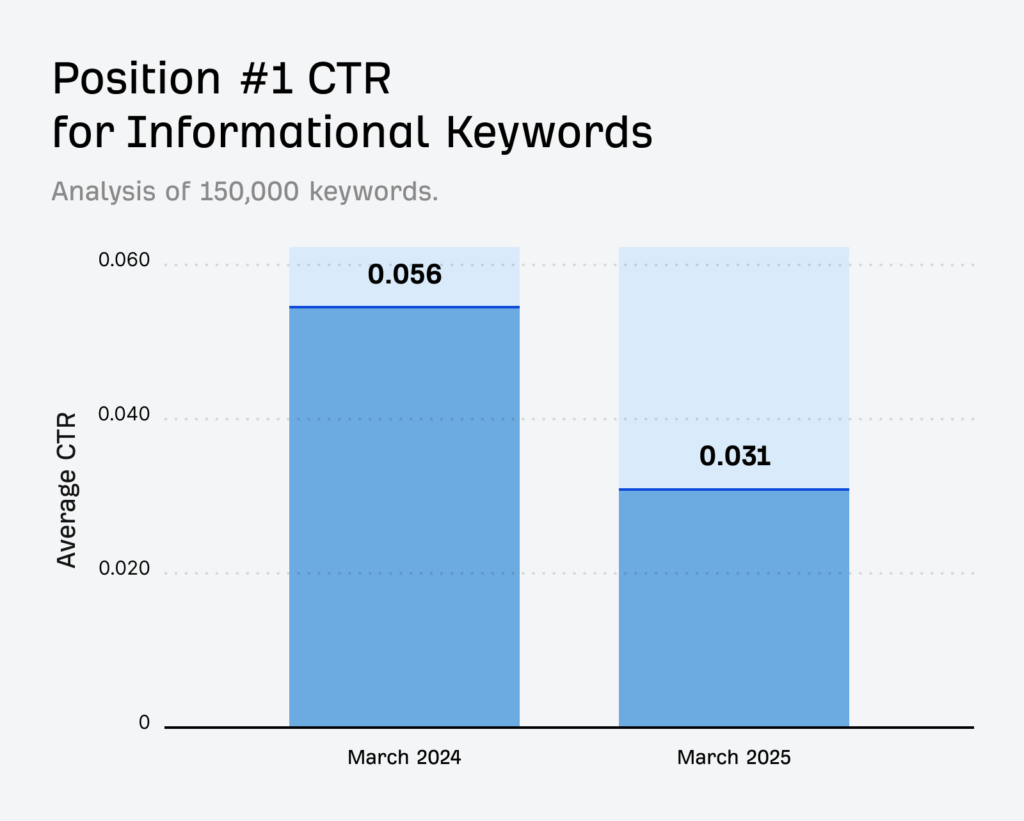
Image from Ahrefs
AI Overviews SEO Strategy in 2026
According to Google’s Search Central documentation, the best practices implemented by SEO experts Philippines remain relevant when aiming to optimize for AI Overviews. It explicitly states that there are no additional requirements or special optimizations necessary to appear in this spot. This means that as long as a website maintains the technical requirements (e.g., mobile-friendly), adheres to Google’s spam policies, and follows E-E-A-T (Experience, Expertise, Authoritativeness, and Trustworthiness), it can rank organically and is eligible to be surfaced within AI-generated summaries.
However, with more companies realizing the advantage of being mentioned in Google AI Overviews, competition is expected to intensify. Thus, simply meeting baseline requirements may no longer be enough. Brands need to implement a focused strategy to target both AI and traditional SEO. Here are three aspects to work on:
Content Architecture and Formatting
AI Overview relies heavily on well-structured, easily scannable content to accurately extract and synthesize information. For example, AIOs often pull video content from YouTube, especially when visual steps or demonstrations are more useful than a text summary. When users click them, they expand without being redirected to the video source and can be played directly at the most relevant key moment for their query.
This feature anchors on the structural metadata that YouTube creators provide. Metadata, like chapters, timestamps, titles, and transcripts, enable search engines to identify specific segments within a video. Based on the model’s understanding of the content, Google can pinpoint and surface the exact portion most aligned with user intent.
To improve visibility in Google AI Overviews, metadata architecture should be intentional and query-aligned. Here are some best practices to optimize content for Google AI overviews:
- Align titles and headings to specific queries.
- Use clear heading hierarchies (H1, H2, H3), short paragraphs, and bullet points to improve scannability.
- Answer questions directly before expanding into deeper explanations.
- Reinforce meaning through subheadings, summaries, and contextual phrasing.
- Optimize titles, descriptions, alt text, and schema markup.
- Use schema markup to explicitly label content. Priority schemas include:
- FAQPage: For question-and-answer pairs.
- HowTo: For instructional content.
- Person/Organization: To verify the author’s identity and brand authority.
Semantic Signal
Google does not rely on keywords alone when ranking content. Rather, it depends on semantic understanding to interpret not just what the content says, but how it relates to broader topics, entities, and user intent. To achieve this, Google anchors to its Knowledge Graph, an internal database that maps relationships between people, organizations, concepts, and topics.
The same is true for extracting results for Google AI Overviews. Thus, instead of targeting isolated keywords, websites should build pillar pages supported by related cluster content to strengthen semantic depth. This signals to Google that the site has comprehensive coverage of a subject, and reinforces its position within the Knowledge Graph.
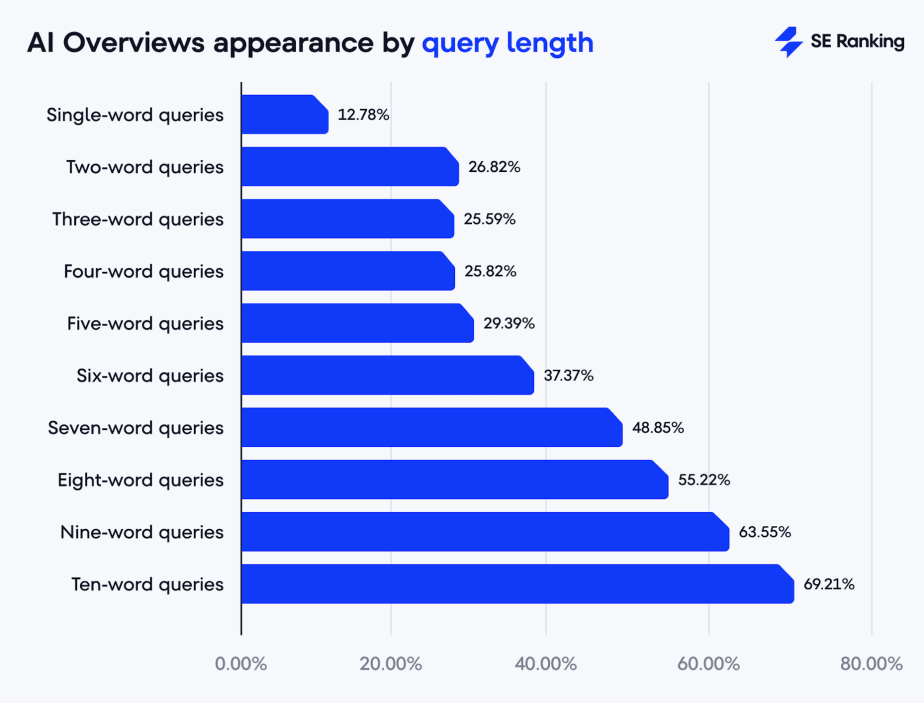
Image from SE Ranking
Strategic E-E-A-T
Google prioritizes sources with verified expertise, which is why it uses E-E-A-T as its primary filter for AI Overview extraction. For example, a software review is more valuable when based on real campaigns run by an SEO consultant specialist. This is also why Google pulls up institutional sources (e.g., academe, government agencies, and established organizations) over individual publishers.
Here are some insights to establish E-E-A-T:
- Focus on long-tail, high-intent queries.
- Prioritize brand visibility across multiple channels (articles, videos, podcasts, social media), so AI systems recognize its expertise and authority.
- Cross-platform distribution ensures AI encounters the brand consistently.
- Engage users to build loyalty and relevance.
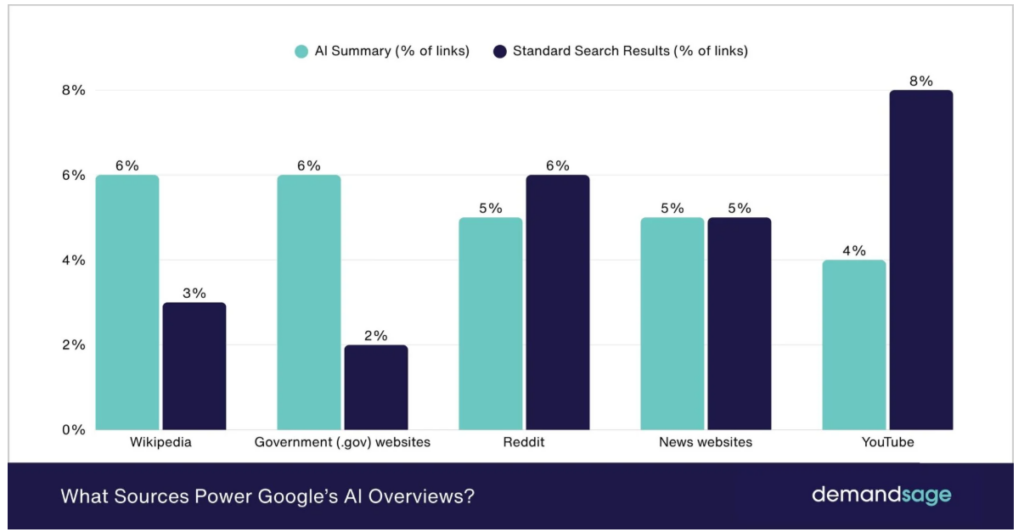
Image from DemandSage
Take Control of Your SEO in the Age of AI
Google AI Overviews now shape nearly half of informational queries and cut organic click-through rates when they appear. That shift is real and has enough evidence to start shifting your SEO strategy in 2026.
I’ve worked with businesses navigating these shifts. My approach is simple: focus on strategies that actually get results, using SEO and AI-aware techniques tailored to your brand. If you want to adapt your SEO for this new landscape, I can help.
Contact me today and let’s figure out the best approach for your business.
References
https://www.searchenginejournal.com/google-ai-overviews-surges-across-9-industries/568448
https://www.wordstream.com/blog/google-ai-overviews
https://search.google/ways-to-search/ai-overviews
https://developers.google.com/search/docs/appearance/ai-features